Drywood Termites vs Dry Rot: What's the Difference?
If you've noticed damage to the wood in your Oxnard home, you might be wondering whether you're dealing with drywood termites or dry rot. While both can cause serious structural damage, they're fundamentally different problems that require different solutions. Understanding the distinction is the first step toward protecting your home and knowing when to call in a professional.
Dry rot is a fungal disease that attacks wood, breaking down its cellular structure from the inside out. It thrives in moist environments and can spread rapidly through wood that lacks proper ventilation or has moisture issues. Drywood termites, on the other hand, are insects that consume wood as their primary food source. Unlike their subterranean cousins, drywood termites live entirely within the wood they infest and don't need soil contact to survive. Both can cause significant structural problems, but the treatment approaches are completely different, which is why accurate identification matters so much.
What Does Wood Rot Look Like? Identifying Dry Rot Damage
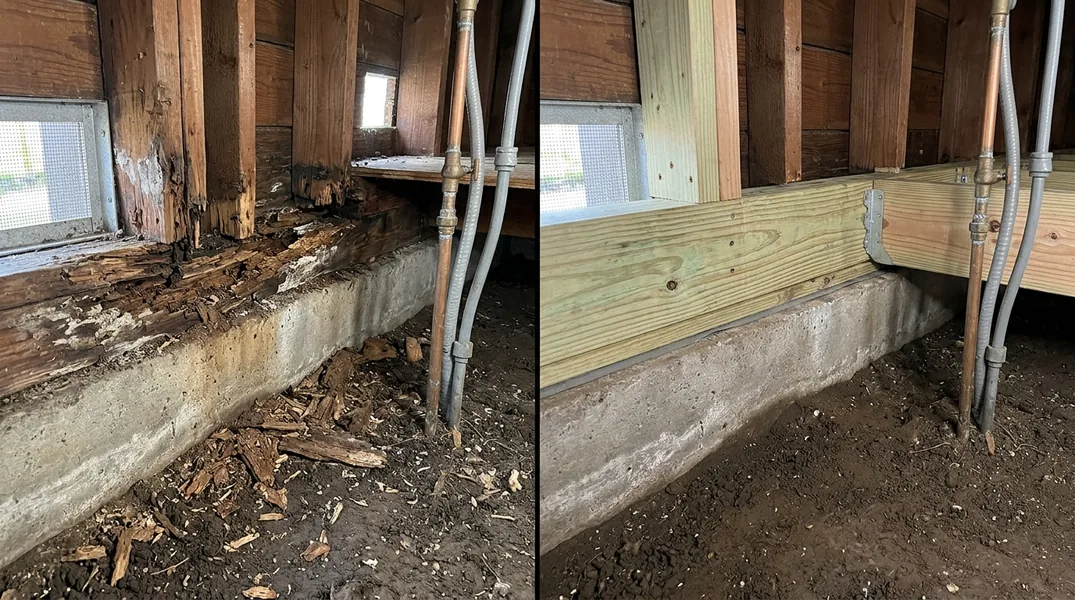
Dry rot typically presents with very distinctive visual characteristics that can help you identify it early. The infected wood often develops a dark brown or blackened appearance, and you'll notice the wood becomes brittle and crumbly to the touch. One of the most telling signs is that the wood shrinks and cracks in a distinctive cubic pattern, forming deep fissures that run both parallel and perpendicular to the grain. This cube-like cracking is almost like a fingerprint for dry rot and rarely appears with other types of wood damage.
Another key indicator of dry rot is the presence of mycelium, which looks like fine white or gray cobweb-like growth on the wood surface. You might also see fruiting bodies that resemble mushrooms or toadstools emerging from affected wood, particularly in damp, poorly ventilated areas like basements or crawl spaces. The wood affected by dry rot loses its structural integrity quickly, becoming soft and spongy. If you press on it with a screwdriver or similar tool, it may crumble or collapse. This is why dry rot can be so dangerous if left untreated, as it weakens the very bones of your home's structure. If you suspect dry rot in your Oxnard property, Wood Rot & Dry Rot Repair services should be your next call.
Signs of Termite Damage in Wood: Spotting the Insects
Drywood termite damage looks quite different from dry rot, though it can be equally destructive. One of the most important clues is the presence of termite frass, which is the technical term for termite droppings. Termite frass appears as tiny, pellet-shaped debris that's usually tan, brown, or reddish in color. Unlike other types of dust or debris, termite frass is relatively uniform in size and shape, resembling fine sand or sawdust. You'll often find it piled up in small mounds near infested wood, or it may spill out from small exit holes that termites create in the wood surface.
The actual wood damage from drywood termites creates hollow galleries and tunnels inside the wood. The surface may appear relatively normal at first, but if you tap on it or probe it gently, you'll discover that the interior has been hollowed out. Drywood termites leave thin layers of wood intact on the outside, which is why the damage can progress significantly before becoming visually obvious. You might also notice small, clean, round exit holes about the size of a pinhead scattered across the wood surface. These are where termites emerge after reaching maturity. Unlike dry rot, which produces a soft, crumbly texture, termite-damaged wood often feels harder on the outside but sounds hollow when tapped. If you're seeing these signs in your home, Termite Damage Repair should be addressed promptly to prevent further structural compromise.
Key Differences: Moisture, Spread, and Treatment
One of the most critical differences between dry rot and drywood termites relates to moisture. Dry rot absolutely requires moisture to thrive and spread. It's attracted to damp wood, poorly ventilated spaces, and areas where water intrusion or high humidity creates the perfect breeding ground. Addressing moisture problems is central to treating dry rot. Drywood termites, conversely, don't require high moisture levels to survive. They can infest and damage wood in dry environments, which is why they're called drywood termites in the first place. This makes them a threat in virtually any part of your home, from attics to exterior walls, regardless of moisture conditions.
The way these problems spread is also fundamentally different. Dry rot spreads through fungal spores that travel through the air and through direct contact with infected wood. Once established in one area, it can spread to adjacent wood if moisture conditions remain favorable. Drywood termites spread through active infestation. A colony of termites will continue to expand and consume more wood as long as the colony remains active and food is available. The treatment for dry rot focuses on eliminating moisture, removing infected wood, and improving ventilation. Treatment for drywood termites typically involves targeted pesticide applications or fumigation. Because these approaches are so different, misdiagnosis can lead to wasted time and money. Professional inspection is the best way to know for certain what you're dealing with.
When to Call a Professional: Wood Rot & Dry Rot Repair Near Me
While minor surface damage might be something a homeowner can address independently, both dry rot and drywood termite damage typically require professional intervention. Structural wood damage undermines the safety and integrity of your entire home, and attempting DIY repairs on load-bearing beams, floor joists, or wall framing can create serious safety hazards. A professional inspection can definitively identify whether you're dealing with dry rot, termites, or another issue entirely, and they can assess the full extent of the damage that might not be visible to the untrained eye.
If you're in Oxnard and you've discovered wood damage, the sooner you get a professional assessment, the better. Early intervention can prevent exponential damage and costly repairs down the line. Oxnard Carpentry specializes in both Wood Rot & Dry Rot Repair and Termite Damage Repair, along with structural solutions like Floor Joist & Subfloor Repair and Beam Replacement & Load-Bearing Wall Removal. Whether your damage is fungal or insect-related, we can evaluate the problem, explain your options, and provide a comprehensive repair plan. Contact us today at (805) 394-3111 or request a free estimate to get started.
Prevention Tips: Protecting Your Home from Both Threats
The good news is that many of the steps you take to prevent one type of damage will help prevent the other. Moisture control is paramount for dry rot prevention. Ensure your gutters are clean and functioning properly, that downspouts direct water away from your foundation, and that crawl spaces and basements are adequately ventilated. Fix any plumbing leaks promptly, and consider using a dehumidifier in naturally damp areas. Proper ventilation is your first line of defense against fungal growth and the moisture conditions that invite it.
For drywood termite prevention, focus on eliminating wood-to-soil contact around your home's foundation. Maintain a gap between soil and any exposed wood framing, and keep mulch and wood chips away from your foundation. Inspect exterior wood regularly for signs of damage or termite activity, and seal cracks and gaps in your home's exterior. Regular inspections, whether you do them yourself or hire a professional, can catch problems early before they become expensive. If you notice any suspicious signs of damage, frass, or hollow-sounding wood, don't wait. Reach out to Oxnard Carpentry at (805) 394-3111 for a professional evaluation and the peace of mind that comes with expert guidance.
Looking for a professional carpentry contractor in Oxnard? Oxnard Carpentry responds fast for all your carpentry needs.
Get a Free QuoteOur services: Wood Rot & Dry Rot Repair · Termite Damage Repair · Floor Joist & Subfloor Repair