Why Old Oxnard Homes Develop Sagging Floors
If you own an older home in Oxnard, you may have noticed that certain rooms feel slightly uneven underfoot. That subtle slope or sag in your hardwood or tile flooring is not just cosmetic. Sagging floors are a red flag that something structural is failing beneath your home, and in coastal Oxnard properties, the culprit is almost always moisture.
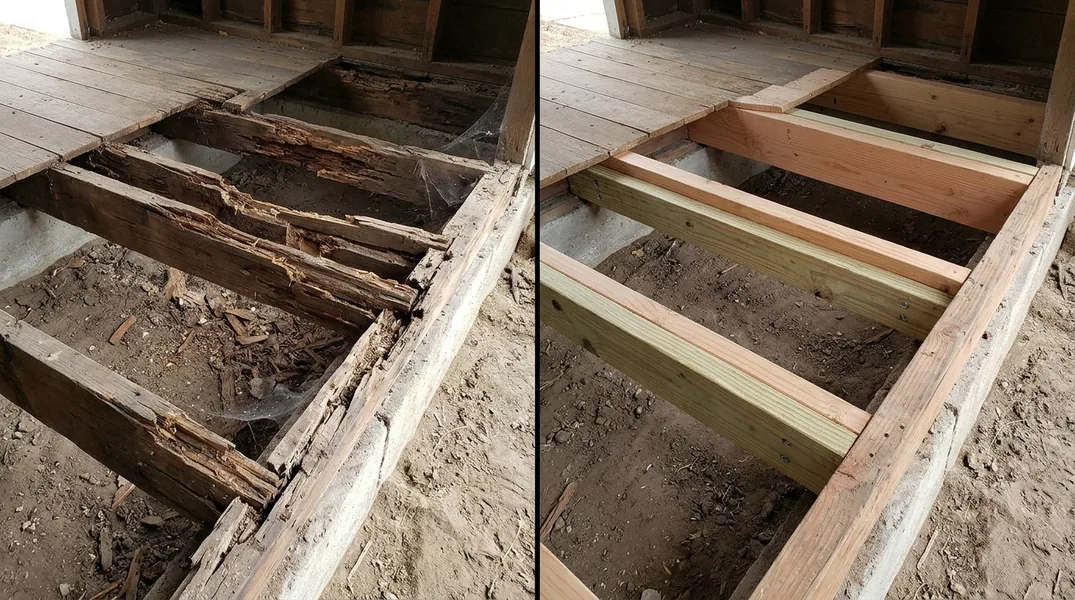
The primary cause of sagging floors in older homes is the deterioration of floor joists, the horizontal wooden beams that support your floor system. These joists sit in crawlspaces, basements, or attic cavities where they are exposed to moisture, humidity, and sometimes standing water. Over decades, repeated cycles of dampness cause wood fibers to break down. The wood loses its structural strength, becomes soft and spongy, and eventually cannot bear the weight of your home. What started as a minor sag can progress to a noticeable dip, cracked drywall, or even a floor that feels bouncy or unstable when you walk across it.
Crawlspace Moisture in California: The Hidden Culprit
Crawlspaces are the hidden foundation of most homes, and they are also the most vulnerable zone for moisture problems. In Oxnard and surrounding coastal areas, crawlspaces face a perfect storm of moisture sources. Ocean air brings salt spray and humidity. Winter rains seep through soil and foundation cracks. Poorly graded yards direct water toward the home instead of away from it. Even in dry months, coastal fog and morning dew can create persistent dampness that never fully evaporates.
When crawlspace moisture california conditions go unchecked, wood rot and dry rot take hold. The sandy soil common to Oxnard does not hold water well, but it also does not prevent capillary action, a process where moisture wicks upward through soil into wood. Without a vapor barrier, proper drainage, or ventilation, your floor joists become saturated. Mold and fungal growth accelerate the decay. The wood loses its load-bearing capacity. This is why sagging floors are so common in older coastal properties and why addressing crawlspace moisture is essential to preventing future damage.
Understanding Floor Joist Damage and Sistering
Before diving into repair solutions, it helps to understand what is happening to your floor joists. A floor joist is typically a 2x8, 2x10, or 2x12 piece of lumber that runs perpendicular to your home's length, supporting the subfloor and everything above it. When wood rot sets in, the joist loses density. A healthy joist can support hundreds of pounds; a rotted joist may fail under a fraction of that load. Sagging occurs because the joists can no longer maintain a level plane under the weight of the home and its contents.
Floor Joist & Subfloor Repair often involves a technique called sistering. Sistering means installing a new, pressure-treated or solid wood beam alongside the damaged joist and fastening them together with bolts, nails, or lag screws. The new sister joist shares the load and restores strength to the system. This approach is far more cost-effective than replacing the entire joist, and it preserves the structural integrity of your home without requiring major invasive work. The sister joist is typically cut to match the length of the damaged section, or sometimes runs the full span for maximum support.
Signs Your Home Needs Sagging Floor Repair
Recognizing the early warning signs of floor joist failure can save you thousands in repair costs. The most obvious symptom is visible sagging, a noticeable dip or slope in your flooring that gets worse over time. You might notice doors or windows that no longer close properly because the frame has shifted. Cracks in drywall, especially diagonal cracks radiating from corners of doorways, often accompany floor movement. Some homeowners report a bouncy or spongy feeling when walking across certain areas, a sign that the joists are flexing more than they should.
Less obvious but equally important signs include a musty odor in the crawlspace, visible mold or dark staining on joists, or wood that feels soft when probed with a screwdriver. If you can see daylight between the joist and the subfloor, the joist has likely settled significantly. Many homeowners also notice that their energy bills increase as sagging floors create gaps in the thermal envelope, allowing conditioned air to escape. If you spot any of these red flags, it is time to get a professional inspection and discuss sagging floor repair options with an experienced contractor.
How Oxnard Carpentry Addresses Sagging Floors
A proper sagging floor repair begins with a thorough inspection of the crawlspace and floor system. At Oxnard Carpentry, we assess the extent of rot, identify moisture sources, and evaluate the structural load to determine the best repair strategy. For some homes, sistering joists is sufficient. For others, we may recommend a combination of Wood Rot & Dry Rot Repair, crawlspace encapsulation, and joist replacement or reinforcement.
After repair work is complete, addressing the root cause of moisture is critical. We often recommend installing a vapor barrier in the crawlspace, improving drainage around the foundation, and ensuring proper ventilation. Some homes benefit from a crawlspace dehumidifier or sump pump system. The goal is not just to fix the floor today, but to prevent future damage. When you call Oxnard Carpentry at (805) 394-3111, we will schedule a free estimate to evaluate your home and discuss the best path forward.
Sagging Floor Repair Cost in Oxnard: What to Budget
The cost of sagging floor repair varies widely depending on the extent of damage, the number of joists affected, and the size of your home. A simple sistering project on one or two joists might cost between 1,500 and 4,000 dollars, while extensive repairs involving multiple joists, moisture remediation, and foundation work can run 8,000 to 20,000 dollars or more. Factors that influence pricing include the accessibility of the crawlspace, the type of wood used for sister joists, whether temporary support beams are needed during work, and the scope of moisture control measures.
It is important to view floor joist repair as an investment in your home's structural integrity and long-term value. Delaying repairs typically makes the problem worse and more expensive. Wood rot spreads, joists weaken further, and the risk of catastrophic failure increases. For an accurate assessment of pricing for your specific situation, contact Oxnard Carpentry today. We provide detailed estimates that break down labor, materials, and any additional work needed to stabilize your floors and control moisture.
When to Call a Professional for Floor Joist Repair Near Me
DIY floor repair is not recommended. Crawlspaces are confined, potentially hazardous spaces. Improper sistering or inadequate fastening can make the problem worse. Professionals have the tools, knowledge, and experience to work safely and ensure repairs meet building codes. A poorly executed floor joist repair can compromise your home's safety and resale value.
If you are concerned about sagging floors or crawlspace moisture in your Oxnard home, reach out to Oxnard Carpentry. We serve the local area with expertise in wood rot repair, floor joist reinforcement, and structural restoration. Call us at (805) 394-3111 or visit our website to request a free estimate. The sooner you address sagging floors, the sooner you can restore your home's stability and peace of mind.
Looking for a professional carpentry contractor in Oxnard? Oxnard Carpentry responds fast for all your carpentry needs.
Get a Free QuoteOur services: Wood Rot & Dry Rot Repair · Termite Damage Repair · Floor Joist & Subfloor Repair